All posts by Calex Electronics

pyrometer food

Non-Contact Infrared Sensors in the Food Processing Industry

Calex non-contact infrared temperature sensors are ideally suited for use in food processing and manufacturing industries, as they can be used without contaminating or disturbing the product.

The sensors have a very fast response time and can accurately measure the surface temperature of food substances moving on a conveyor belt, in vats with stirrers and even through glass jars. Typical applications include the manufacture of chocolate and toffee, baked products such as bread and biscuits, and frozen foods.

Measuring the surface temperature of food products

Foods are non-reflective and have a high emissivity at low temperatures, which makes them easy to measure using low-cost general-purpose long-wavelength (8–14 µm) sensors such as the PyroCouple. 

The PyroUSB model PUA8 can measure temperatures as low as -40°C, making it ideal for measuring frozen food.
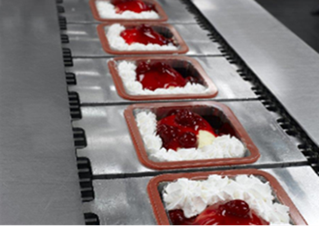
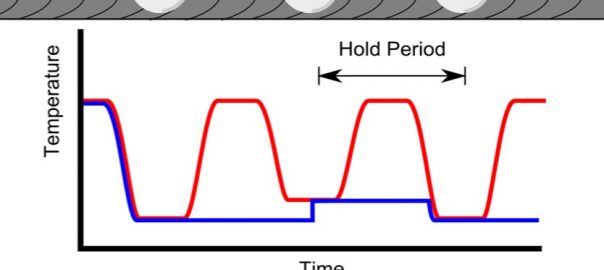
Non-contact infrared temperature sensors with peak or valley hold can be used to measure the temperature of individual food products on a conveyor.

Measuring from food products on a conveyor or in a vat with a stirrer

Some of our sensors have peak and valley hold processing which can continuously output the temperature of objects on a conveyor, and ignore the gaps between them, or the surface temperature of liquids in a vat with a stirrer.
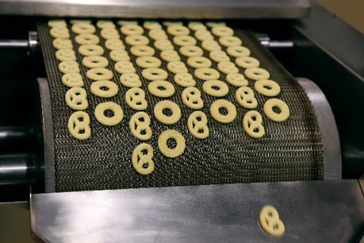
Food production equipment can require the use of an infrared temperature sensor with an adjustable emissivity setting

 Measuring the surface temperature of food production equipment

For applications where the emissivity of the target could be lower than 0.95, such as when measuring the temperature of baking trays, we suggest using a sensor with an adjustable emissivity setting, like the PyroEpsilon, PyroNFC or PyroUSB.
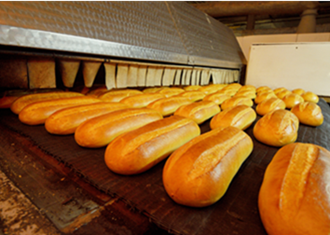
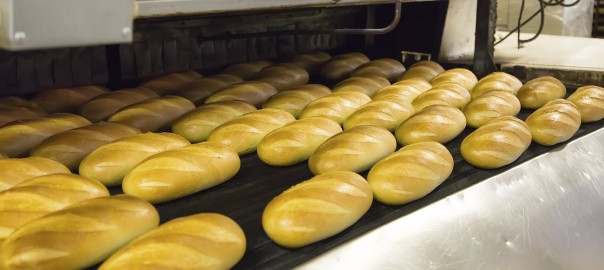
Non-contact temperature sensors can provide excellent results when measuring the surface temperature of baked goods.

Stainless steel surfaces, which are highly reflective and have a low emissivity, are usually best measured using a short wavelength (2 µm) sensor such as the PyroUSB model PUA2.

Measuring the temperature of food in glass containers

The PyroUSB model PUA2-151-LT can also be used to measure the temperature of hot food products inside glass containers (such as in sterilisation applications), as glass is usually transparent to infrared radiation at 2.2 µm.

Provided the food inside the jar is hot enough, the Calex PUA2 sensor can "see" through the jar and measure the temperature of the food within

Measuring at high or low ambient temperatures

Most Calex sensors operate at ambient temperatures from 0°C to 70°C, however, for use near ovens and heaters, some sensors have an optional air/water cooling jacket.

The PyroMini sensor is able to withstand ambient temperatures up to 120°C or 180°C without cooling.

If the ambient temperature is below freezing, the air/water jacket can be used to keep the sensor heated above 0°C and prevent ice from forming on the lens.

The PyroUSB measures as low as -40°C, so it can measure the temperature of frozen foods.

Measuring in tight spaces

The PyroNFC is a small sensor with a side-entry cable which makes it ideal for mounting in tight spaces. This sensor is fully-configurable via a smartphone app. With a voltage or Type K thermocouple output option, it can quickly and easily be used to replace existing contact probes.
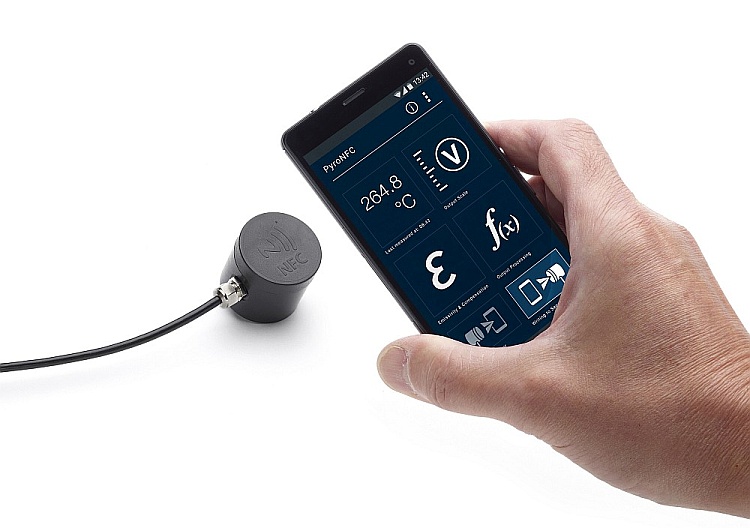
PyroNFC pyrometer with NFC communications

Measuring in multiple locations

For measuring the temperature in multiple locations on a food production line, the PyroMiniBus digital sensor with RS485 Modbus communications is ideal.

Sensors can be connected to a monitoring system such as a panel PC or SCADA. We can supply industrial panel PCs, pre-loaded with Windows, which allow temperature data to be accessed in real-time.

Optionally, up to 6 PyroMiniBus sensors can be connected, via the PMBHUB junction box, to a local display (model PM180) with data logging, alarms and RS485 Modbus master/slave interfaces.

A network of PyroMiniBus sensors can significantly reduce the cost and complexity of cabling, compared to using sensors with an analogue output.
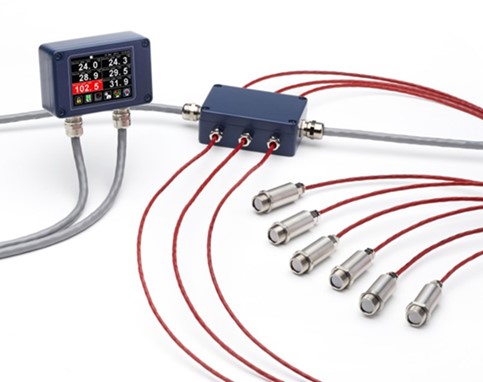
PyroMiniBus infrared temperature sensors can be connected to optional 6-channel local displays, or directly to centralised monitoring systems.

Specialist applications

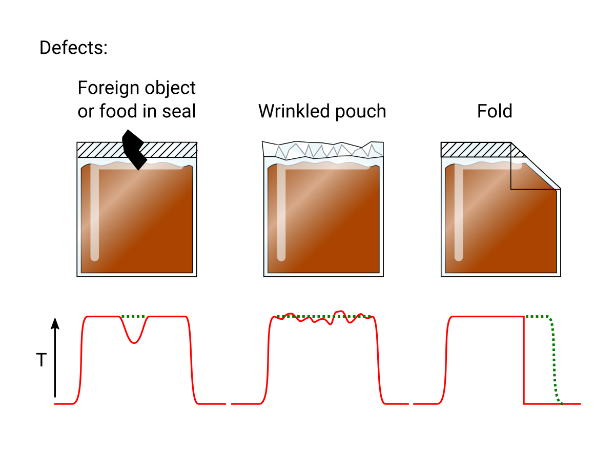
Our PyroCube sensors can measure the surface temperature from small targets or thin plastic films. There is a model with a fast 1 ms response time which can be used in applications such as food pouch sealing. The sensor helps detect foreign objects or folds in the pouch seal by providing a detailed temperature profile of the seal area.
Hazardous applications

In applications involving powdered food materials, such as flour milling, there can be an explosion risk; for such hazardous applications we have the ExTemp intrinsically safe sensor.


Food for thought!

All the above sensors have a tough lens made of either germanium or silicon (not glass). However, if additional safeguards are required, a plastic window is available to improve protection of the lens against mechanical damage, and to help contain fragments of the lens in case any damage does occur.

Dust and steam on the sensor lens can significantly affect the accuracy of measurement. If this is an issue, an air purge collar is recommended to help keep the sensor lens clean and dry, and the amount of steam should be minimised by extraction.

We can also supply low-cost handheld infrared temperature sensors which are particularly useful as a low-cost way to test if a planned installation of fixed-mount sensors could be successful.

Get in touch

If you have any questions about the use of infrared temperature sensors in food processing, please do not hesitate to contact Calex and we will do our best to help you.

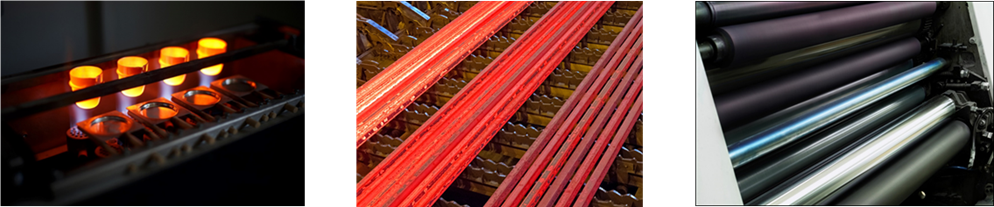
Short wavelength infrared temperature sensors provide improved results on hot metal surfaces. Here is a comparison of three of our shortwave pyrometers.

Comparison of Short Wavelength Infrared Temperature Sensors

Calex short wavelength (2.0 to 2.6 µm) infrared temperature sensors are suitable for accurately measuring the surface temperature of non-metals and some metals at high or low temperatures. These sensors have adjustable emissivity settings, reflected energy compensation and peak and valley hold processing, making them particularly suitable for measuring hot objects in a furnace or on a production line.

The short measurement wavelength enables temperature measurements to be made through glass and quartz, as these materials are usually transparent to infrared radiation at these wavelengths. These sensors can therefore be used with viewports made of glass or quartz, as well as other specialist infrared-transmissive materials.

Typical applications include, among many others:

  • measuring the temperature of iron or steel rollers
  • ceramic, carbon and steel brake discs
  • hot objects inside furnaces and ovens
  • steel manufacturing
  • hot food products inside glass containers

This is a brief summary of the features of our short wavelength sensors (PyroUSB, PyroMini2.2 and FibreMini) to help you choose a sensor for your application.

PyroUSB (model PUA2)

The PyroUSB infrared temperature sensor model PUA2 has a 4-20 mA output, is fully configurable via a USB interface, and has a fast 200 ms response time. Several options are available, which differ in their measurable temperature range (within the limits 45°C to 2000°C). A wide choice of optics is available (15:1, 25:1, 75:1 or close-focus) making it possible to measure targets of almost any size at any distance.

The sensor can be mounted using optional fixed or adjustable mounting brackets and the optional laser sighting tools can be used for accuracy in sighting the target. An optional air-purge collar can help keep the lens free from dust and condensation.

The sensing head operates at ambient temperatures up to 70°C without cooling. For operating at higher ambient temperatures, there is an optional air/water cooling jacket with air purge collar.

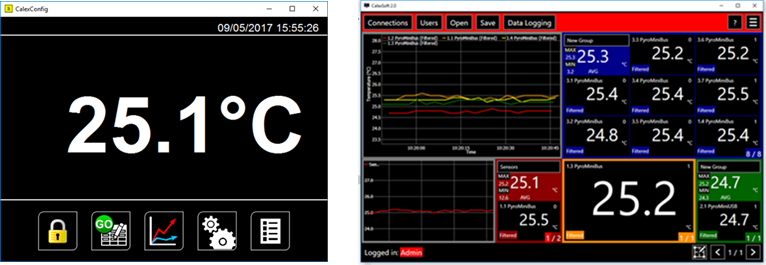
Software (CalexConfig for a single sensor and CalexSoft2 for multiple sensors) is free to download from our website. This simple to use software enables sensor configuration, emissivity adjustment, peak/valley hold processing, temperature display, scrolling temperature chart, on-screen alarms and data acquisition to Excel-compatible .csv text files.

Screenshots of CalexConfig (left) and CalexSoft 2 (right)

PyroMini 2.2

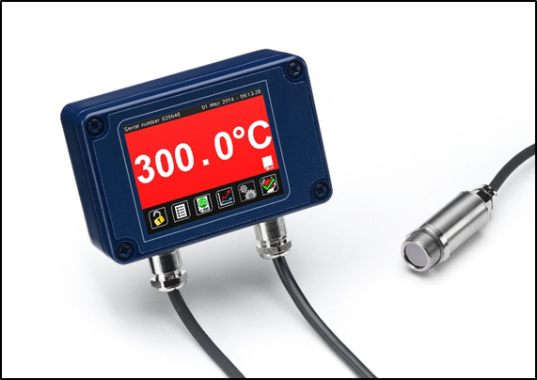
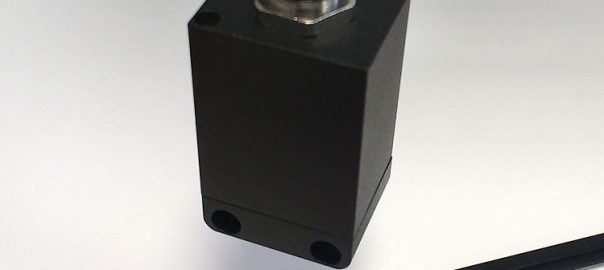
The PyroMini 2.2 sensor has a miniature sensing head, making it ideal for use in confined spaces, along with a separate electronics module.

This sensor has a fast response time of 240 ms and the output can either be 4-20 mA or RS485 Modbus (up to 247 sensors can be connected via the RS485 network). The sensing head operates within the ambient temperature range 0°C to 70°C without cooling. A choice of measured temperature ranges is available within the limits 100°C to 2000°C; and of 15:1, 25:1, 75:1 or close-focus optics. Optional accessories include a fixed or adjustable mounting bracket, laser sighting tools and an air-purge collar.

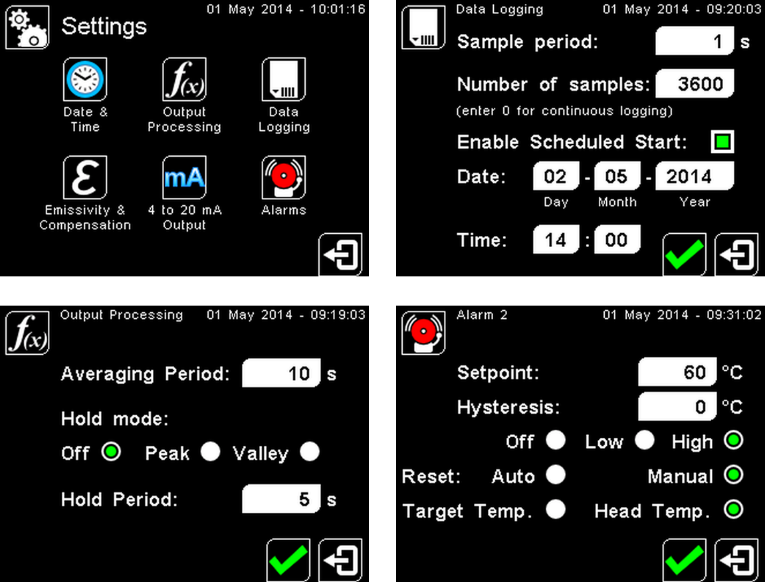
There is an optional touch screen interface which is mounted in the lid of the electronics module. The interface enables sensor configuration, emissivity setting adjustment, reflected energy compensation, temperature display, alarms, a scrolling temperature chart, data averaging, peak and valley hold processing, and data logging to an optional MicroSD card. Sensors with a 4-20 mA output without the touchscreen have their emissivity settings adjusted via two rotary switches inside the electronics module.

Example screen-shots from the PyroMini 2.2 touch screen interface

FibreMini

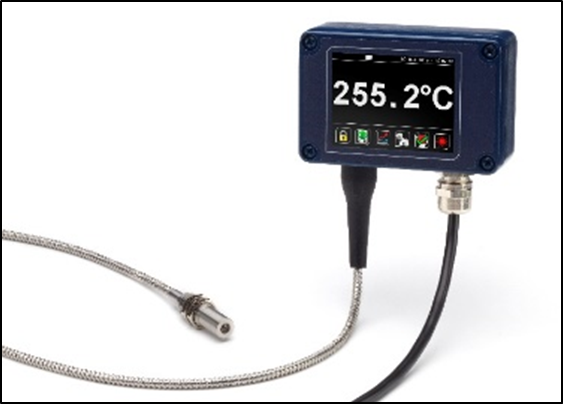
The FibreMini sensor also has a very small sensing head, making it suitable for use in confined spaces. The fibre optic sensing head withstands ambient temperatures up to 200°C without cooling, making it ideal for mounting in harsh environments such as near furnaces, and contains no electronics, allowing improved resistance to electromagnetic interference (such as in induction heating applications).

Two temperature measurement ranges are available, 250°C to 1000°C or 450°C to 2000°C. It has a highly flexible fibre-optic cable (available in lengths of 3, 5 or 10 metres), which can fit in conduits with tight bends, and provides built-in laser sighting as standard, which shows the location and size of the measured spot on the target surface during measurements.

The sensor has a choice of 4-20 mA or RS485 Modbus outputs, 30:1 or 75:1 optics, a fast 125 ms response time and two alarm relays. It has a touch-screen interface for sensor configuration, adjustable emissivity, temperature display, scrolling temperature chart, on-screen alarms and data acquisition to Excel-compatible files. Optional fixed or adjustable mounting brackets and an air-purge collar are available.

Example screenshots from the FibreMini touch screen interface

Quick Comparison of Calex 2 µm sensors

Sensor Model

PyroUSB (PUA2)

PyroMini2.2


FibreMini 


Temperature Range 45°C to 2000°C (Choice of models) 100°C to 2000°C (Choice of models) 250°C to 2000°C (Choice of models)
Maximum Ambient Temperature  70°C 70°C (sensing head) 200°C (sensing head)
Output/Communications 4-20 mA and/or USB 2.0 via Modbus 4-20 mA or RS485 Modbus 4-20 mA or RS485 Modbus

Sighting


Laser sighting tool or dual laser sighting bracket (optional) Laser sighting tool or dual laser sighting bracket (optional) Built-in laser sighting (standard)
Alarm Relays None 2 x Single Pole Changeover alarm relays rated 24 V DC, 1A 2 x Single Pole Changeover alarm relays rated 24 V DC, 1A

Sensing Head Dimensions


Small

Ø 27.6 mm X 61 mm

Smaller

Ø 16 mm X 58 mm

Smallest

Ø 12 mm X 48 mm

Get in touch

For further advice on our short wavelength sensors, please get in touch with us and we will do our best to help you.


Which Viewport Windows are Suitable for Calex Infrared Temperature Sensors?

Calex can supply protective windows for pyrometers, and IR-transmissive viewport windows. This brief summary aims to help you to choose a suitable window.

Protective Windows

Protective windows, such as PWS and PWL, are ideal for use in the food and pharmaceutical industries. They protect the lens of Calex infrared temperature sensors by preventing contamination and/or mechanical damage. In addition, should a lens become damaged, they can retain fragments of the broken lens.

These windows are made from silicon or plastic, and are for use at atmospheric pressure.

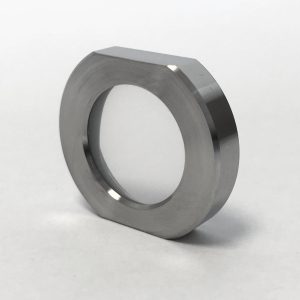
Protective Plastic Window for Calex infrared temperature sensors
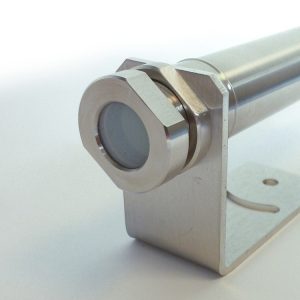
Protective plastic window model PWS, fitted to sensor

Using a Protective Window

To use the windows, mount the sensor using the mounting nut as normal ensuring sufficient thread is available for the window holder. Simply screw the window holder onto the front of the sensor and tighten with a spanner.

Ensure the window is kept clean and dry. If there is dust, condensation or ice on the window, the accuracy of the measurement could be affected. If this is possible in your application, consider using an air purge collar instead, or get in touch and we will discuss the possibilities.

With all models of window, the sensor must have its emissivity setting adjusted to compensate for the small percentage of infrared energy lost to reflection and absorption by the window. Therefore, these windows are only for use with sensors with adjustable emissivity (such as the PyroMini) and are not suitable for simple sensors with a fixed emissivity setting (such as the PyroCouple).

To ensure maximum accuracy of measurements, the emissivity setting to which the sensor must be adjusted can be calculated using this formula:

Emissivity setting = actual emissivity of target x transmission of window

Example

Using the PWS window (transmission 0.78) on an 8-14 µm sensor with a target emissivity of 0.95, the emissivity setting on the sensor should be adjusted to 0.73:

Emissivity setting = 0.95 x 0.768 = 0.73

Infrared Viewport Windows

These windows protect the sensor from chemical damage, high pressure, high temperature or a vacuum, and are designed to be mounted in a flange on your process. They are inexpensive compared to the cost of replacing the lens of the sensor.

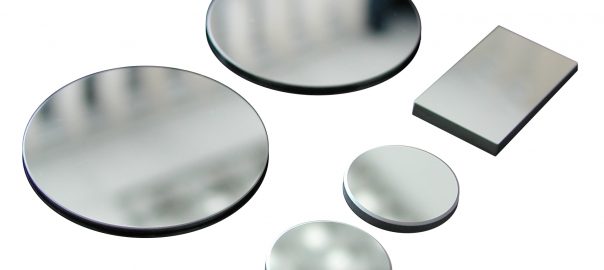
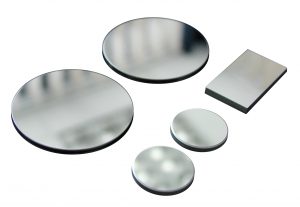
Viewport windows come in a choice of materials to suit a range of sensors and applications. They are commonly circular, however other shapes are available. There is a wide range of standard sizes, or they can be custom-made to suit your requirements.

Infrared viewport windows from Calex for installation into a flange

Specifications

Data sheet: PWS, PWL and Viewport Windows (PDF)

Operator’s guide: PWS, PWL, SIWS (PDF) 

If you would like to find out more about using a protective window or infrared viewport with a Calex pyrometer, please contact our engineers.