
Infrared Temperature Measurement of Small Targets
If your application involves measuring a small target, you should ensure that the measured spot size of the infrared temperature sensor is small enough. Otherwise, it may be difficult to obtain an accurate measurement.
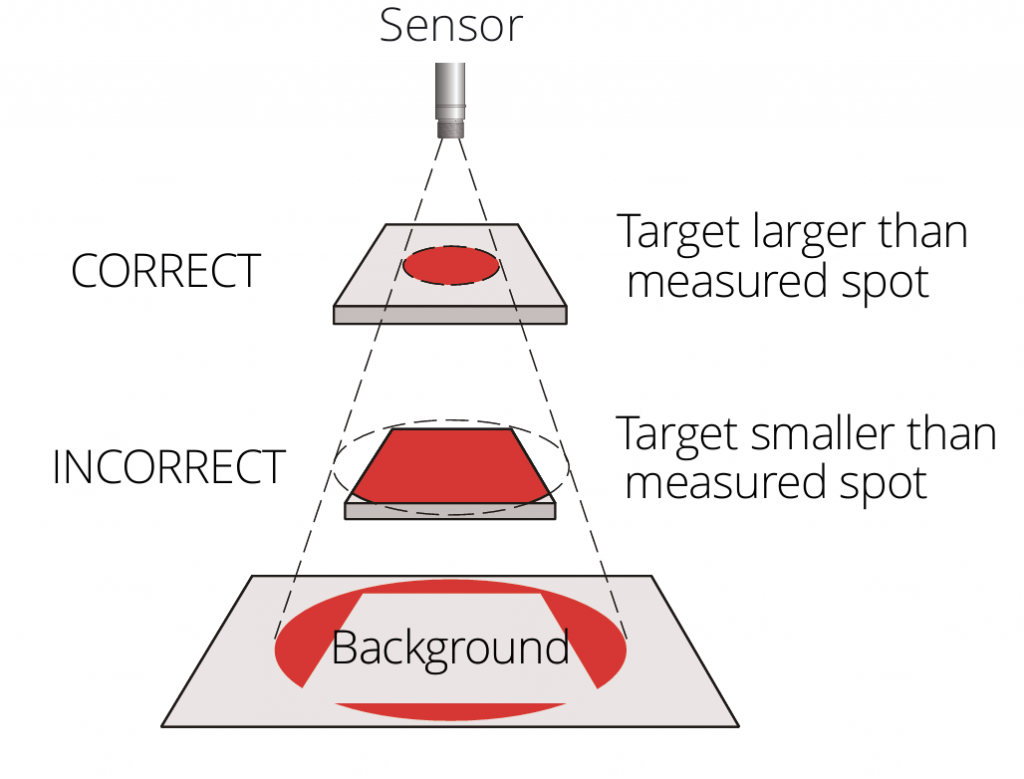
We typically recommend that the measured spot size should be half the target size or smaller for best accuracy. For example, for a target size of 10 mm, the measured spot size should be 5 mm or smaller.
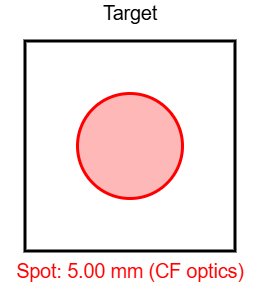
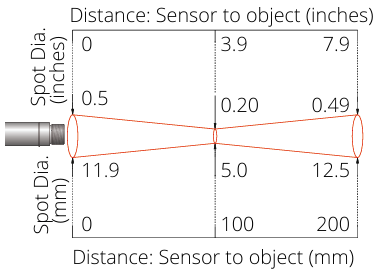
Most of our infrared sensors have close-focus optics options, which are suitable if you intend to mount the sensor close to the target. The optical diagrams found in the datasheet or manual can help determine the optimum distance at which to mount the sensor. Close-focus optics can typically measure a spot size of approximately 5 mm.
If your target is even smaller, a specialised sensor such as the PyroCube or FibreCube may be required. The PyroCube XS can measure a spot size as small as 0.7 mm, whereas the PyroCube S model PCU-S1.6 can measure a spot as small as 1.6 mm in diameter.
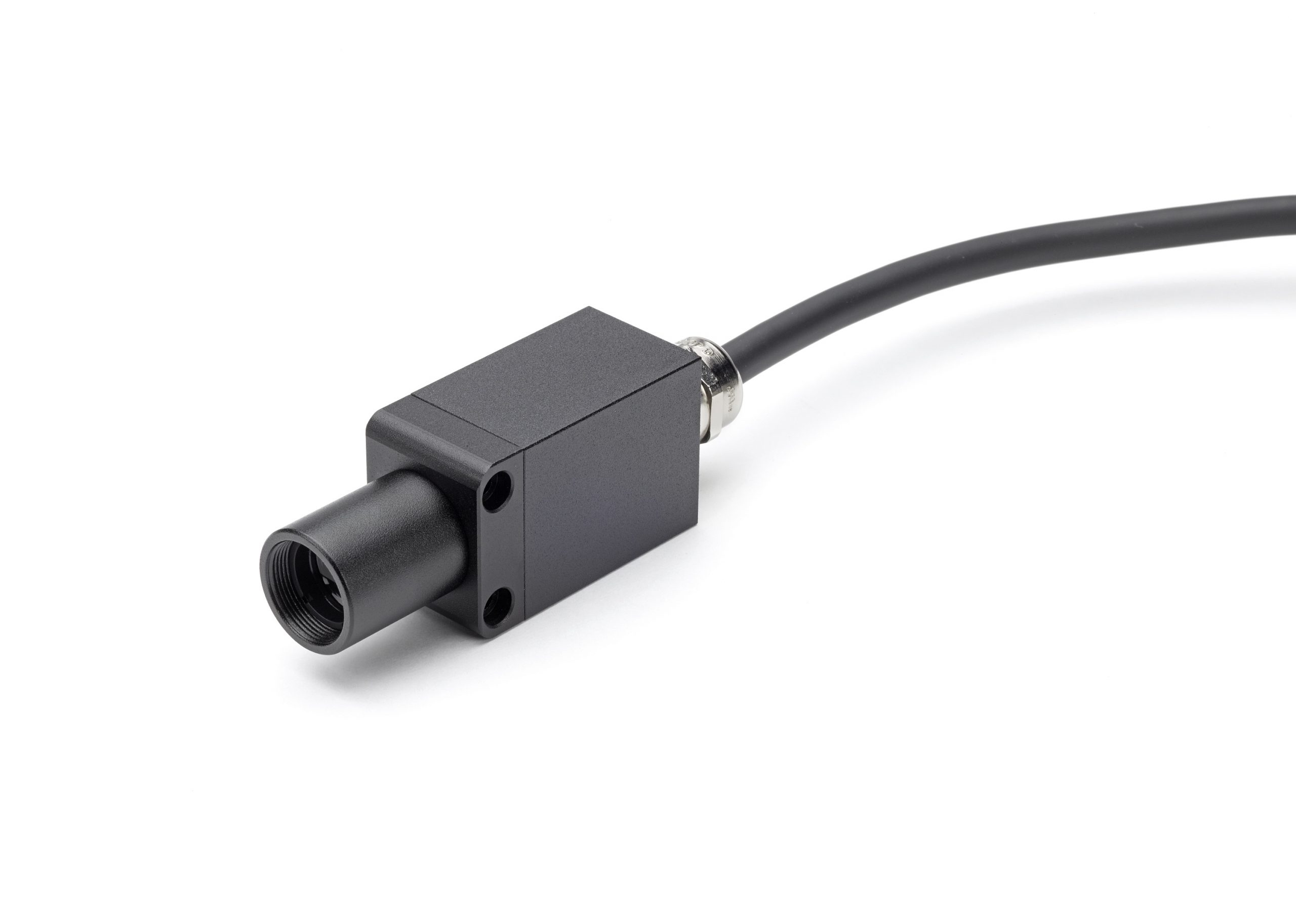
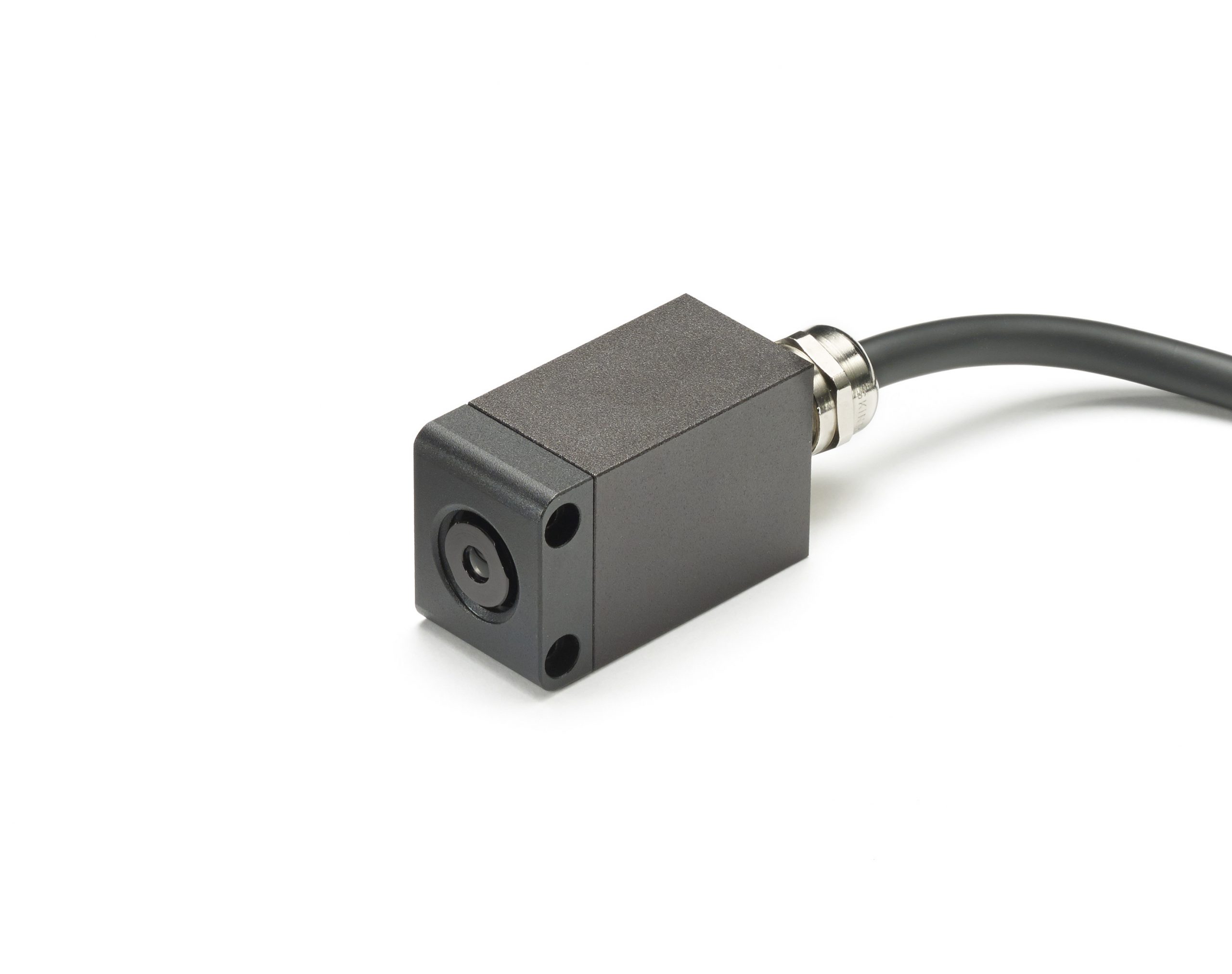
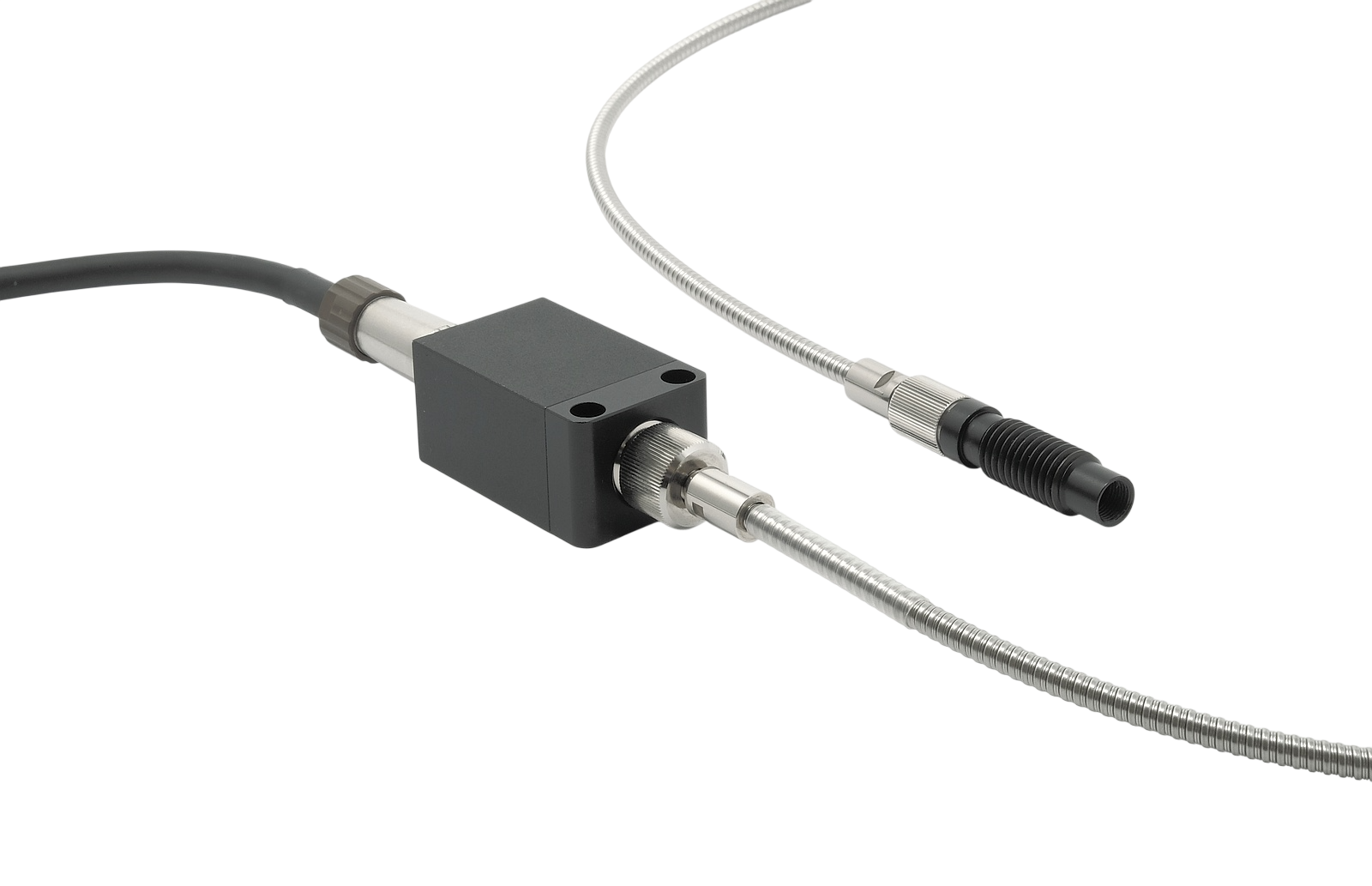
The PyroCube S or XS can be useful in applications such as electric motor rotor temperature measurement, component temperature measurement in PCB manufacturing and electrical wire manufacturing, amongst other applications. More details on some of these applications can be found below.
Electric Motor Rotor Temperature Measurement
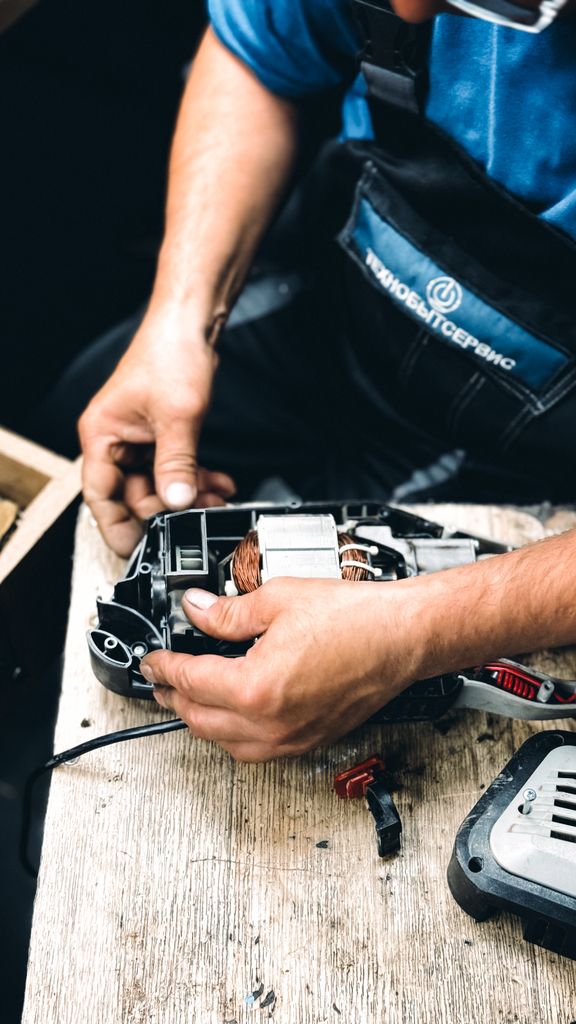
Electric vehicle research and development is growing rapidly. Motor manufacturers are developing highly efficient power systems, and measuring the temperature of moving parts in R&D applications is an ongoing challenge.
The rotor of an electric motor test rig can be measured through a small hole in the stator or housing using the PyroCube model PCU-S1.6. The fast response time means it is possible to obtain an accurate temperature profile during tests, even if the temperature rise is extremely rapid. If the surface is reflective metal, or if copper windings are visible, the test rotor should be painted to increase its emissivity and allow an accurate measurement.
Ensure the hole is at least twice the size of the sensor’s field of view so that the stator temperature does not influence the rotor temperature measurement – see the optical diagram on the PyroCube data sheet for more information.
Component Temperature in PCB Manufacturing
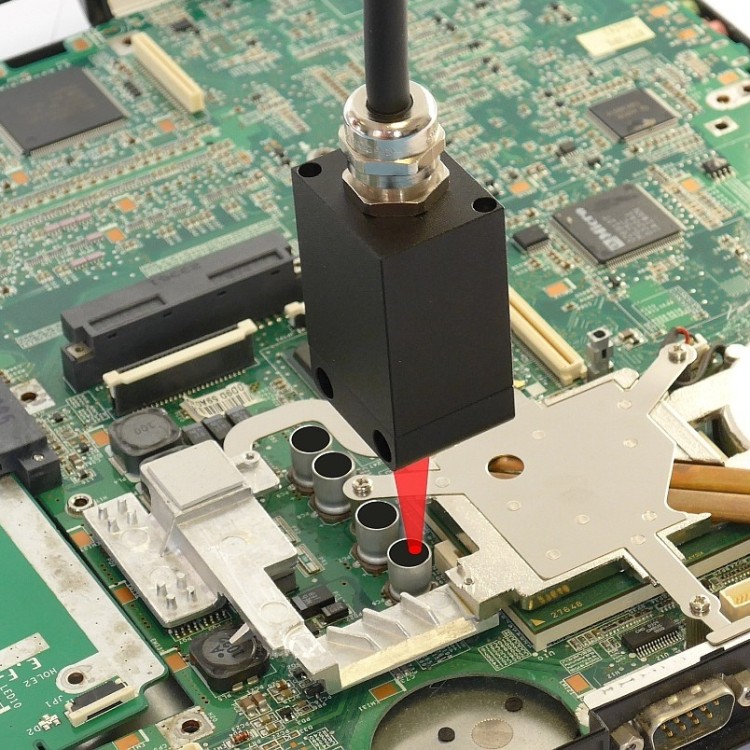
Circuit board manufacturers need to check the temperature of electronic components in several ways, depending on the type of board and its intended use.
When the board is powered in standard usage conditions, or when testing voltage limits, the temperature of individual components such as integrated circuits may be measured quickly and accurately, thanks to the PyroCube’s small measured spot and built-in aiming light.
The PyroCube can also be used to check the surface temperature of a circuit board that has been heated for ambient operating temperature testing.
Electrical Wire and Cable Manufacturing
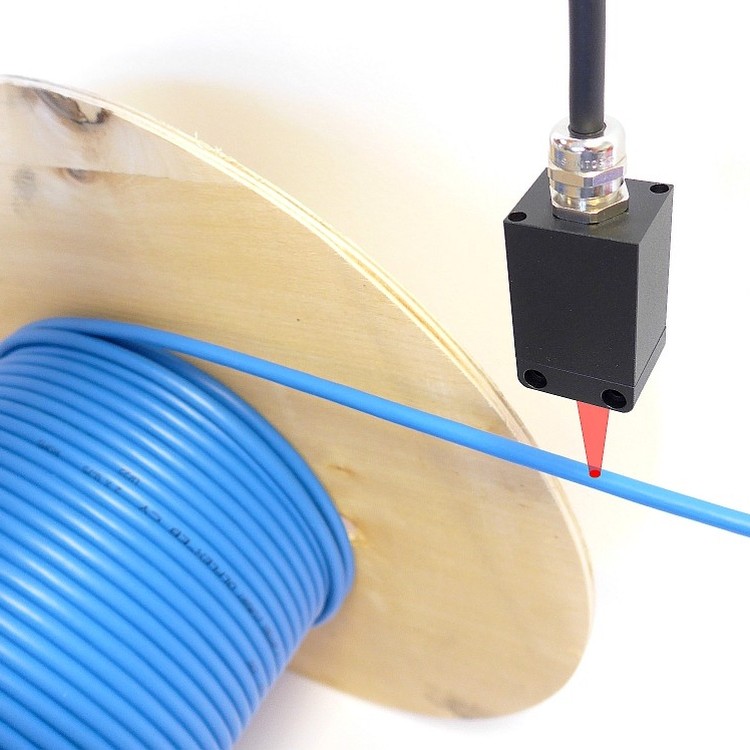
Plastic insulation is applied to electrical wires by passing the copper wire through an extruder. After the extruder, the insulation is flame-polished by passing it through a blowtorch-like flame. The outer sheath (jacket) of the cable is also applied using this process.
The polishing flame is controlled by measuring the temperature of the newly applied insulation with a PyroCube infrared temperature sensor, and connecting the output to a PID controller or PLC. The small spot size allows insulation diameters of 1.6 mm or larger to be measured, and the built-in aim light makes it easy to ensure the sensor is properly aligned.