
Asphalt Temperature Measurement in Road Laying using the PyroCV Infrared Temperature Sensor

The PyroCV Series of infrared temperature sensors is ideal for measuring the temperature of the road surface before and after asphalt is laid.
It is is specifically designed for use on construction machinery and has been tested to EMC requirements for these environments. It provides simple, robust, non-contact temperature measurement with either CAN communications or a voltage output.
Asphalt must be compacted while it is still hot to ensure a minimum of air voids for maximum density and strength. If asphalt is too cold when it is laid, it cannot be fully compacted, resulting in a weaker road surface.
The temperature of the road surface is monitored before and after the asphalt is laid. This helps predict how much time will be available to compact the surface before it has cooled, and ensures the asphalt remains hot enough for proper compaction.
As the asphalt is laid, its temperature is typically between 95°C and 190°C, and the minimum rolling temperature is usually above 75°C.
Typical Installation
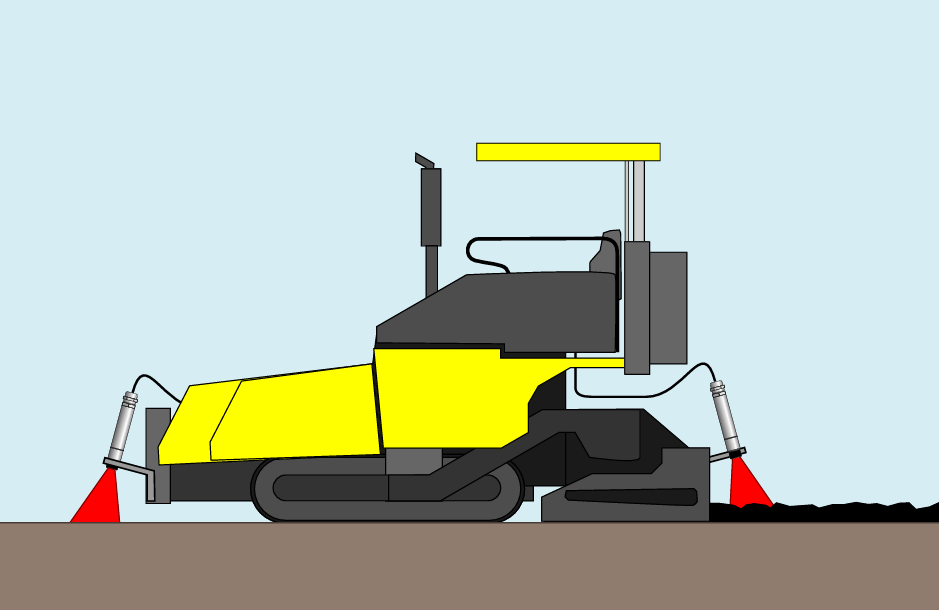
Two PyroCV sensors may be mounted on the paver and aimed at the road surface before and after laying the asphalt.
A further sensor may also be mounted on the roller to monitor the asphalt temperature immediately before compaction.
Application Tips
The emissivity of road surface materials is typically very high, making them easy to measure accurately using an infrared temperature sensor. This also applies when measuring the surface temperature of bond coats or tack coats.
The PyroCV is suitable for ambient temperatures from –40°C to +85°C, making it well suited to outdoor construction machinery applications.
To obtain the best measurement accuracy, ensure that:
- The measured spot is smaller than the road surface being measured.
- The sensor has a clear, unobstructed view of the target.
- The lens is kept clean and free from dust or condensation.
Similar Applications
If asphalt is kept at too high a temperature, or for too long, the ability of the bitumen to bind the mixture will deteriorate.
It is therefore important to monitor temperatures throughout every stage of the process, from mixing and transport to paving and compaction.
Infrared temperature sensors are also used to measure the temperature of the asphalt stream as it is discharged from a mixing plant into transport vehicles, ensuring that the material will still be within specification when it reaches the paving site.
Need Technical Advice?